
Last update 15 October, 2026 by football hung
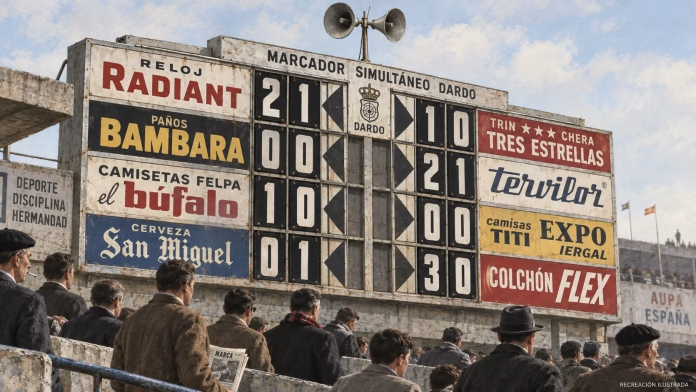
The Dart marker allowed something that today we solve by looking at the mobile: being in one field and knowing what was happening in the others. That simultaneous marker, and then the transistor, They made it possible for one stand to live several games at the same time.. But the information had another route. I was going through a call, a board, some printed codes or the voice of an announcer. And it ended with the question that jumped from seat to seat: who marked?
Imagine the scene. Your team is attacking and, suddenly, a part of the stands celebrates something that has not happened before your eyes. There is no ball in the net, it's a penalty, no expulsion. The goal has come from another city. A man with a radio glued to his ear tells it, another repeats it and the news crosses the tribune. Before notifications, football already had its own social network. Only he spoke loudly.
What was the Dardo marker and what was it for?
It was a panel installed in the fields to report the results of other matches while the local match was being played.. Its popularization in Spain during the years 50 responded to a very specific need: The fan wanted to see his team without losing sight of the rivals in the classification.
Dardo was the advertising company associated with the system. And advertising was not an ornament: It was part of its operation. The pairings could be identified using commercial codes that the viewer consulted in the press.. And advertisement of 1962 preserved in Baetic History documents that relationship between results, advertisers and newspapers. To understand the panel it was not always enough to look at the numbers: you had to know which party they belonged to.
That had a charm that is difficult to explain to someone who has grown up with a classification that updates itself.. In the stands you had to do the math. Another draw could be worth almost as much as your own victory.. The outside marker converted a punt, a corner or a minute lost in something else, because it changed what you needed from the match you were watching.
How the Dart scoreboard keys worked
The key was the bridge between the party and his box. The newspaper indicated what meeting was behind each identifier on the panel; when changing numbers, the fan could interpret the result. The mark at the top of a box should not be confused with the name of a team.. It was an ingenious way to sell advertising and, at the same time, offer a service that people really needed.
The mechanism combined information received from other fields with manual updating of the panel. There was no application working behind each figure: there were people. The telephone and those who transferred and placed the results were part of a chain in which delays and rectifications also occurred..
In addition to the score, some scoreboards used signals to communicate incidents or the status of matches. It is not advisable to attribute a single code to all stages and all periods. Local Variants Mattered. He historical review of Alfredo Relaño in EL PAÍS describe, For example, Colored indicators to distinguish phases of the match.
A piece of news could transform the mood of the stands without changing the game on the pitch.. That was the true strength of the simultaneous: widened the stadium. The fan did not see the distant rival, but his result entered the game as if he were another player.
Mendizorroza: a date to put a face to the memory
There are documented examples that make this story out of vague nostalgia.. According to the research published by SER Vitoria, Mendizorroza debuted his simultaneous score on 18 September 1955, during an Alavés-Real Sociedad. The keys appeared in El Pensamiento Alavés. That device disappeared in 1980: a local chronology, not a withdrawal date for all of Spain.
That Alavés was still very far from the one that would star in the UEFA final 2001 against Liverpool. Between both images there is a transformation of football: from looking for other people's results on a panel to watching a European final on television. The media changed; no need to share nerves.
The transistor: carry all the fields in your pocket
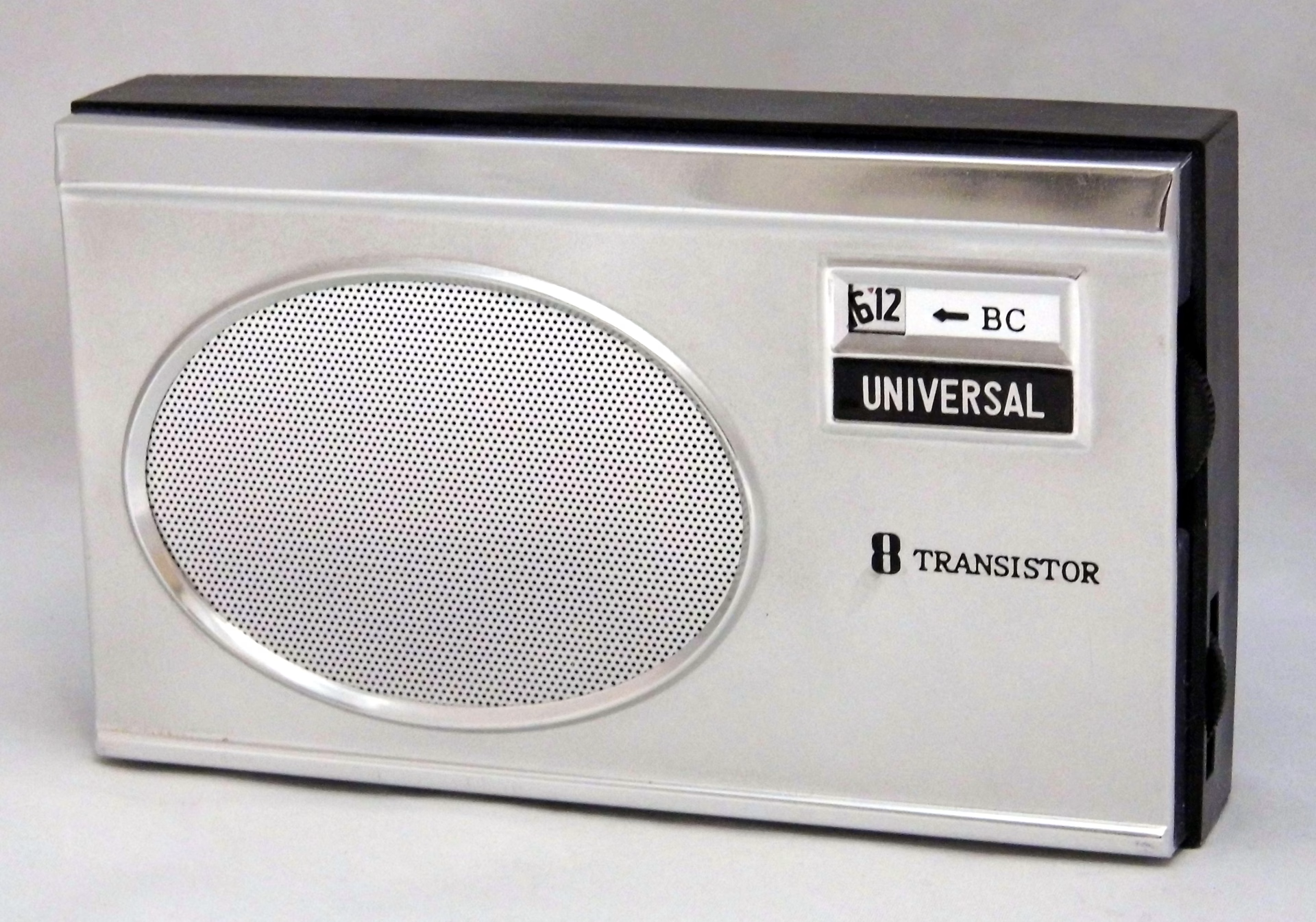
The portable radio made the hobbyist stop depending solely on the dashboard. I could hear the narration of another meeting, learning about a penalty before it had resulted and distinguishing a dangerous domain from a simple 0-0. The number reported. The voice added what the number hid.
The transistor also had its small drawbacks: the batteries, the reception, the search for the exact point on the dial. But it didn't need a screen and allowed you to watch the game while listening to another. In a stand where some had a radio and others did not, whoever carried the device ended up becoming an improvised correspondent. It was not mandatory to know the neighbor to ask how they were doing.
The radio made the day a shared story
The file of RTVE places the birth of Tablero Deportivo in 1952, with Manuel Gil as creator. The SER remembers 1954 like the start of its history Sports Carousel. Son 2 fundamental references to understand how radio turned scattered results into an afternoon that could be followed from beginning to end.
The merit was not just about adding connections. The tension had to be ordered: give way to the field where something was happening, return to an interrupted narrative and explain why that goal affected other teams. The listener learned to recognize voices and stages without seeing them. Sometimes he remembered the narrator's scream better than the play he would later discover in images..
It was not necessary to be on a platform. The day fit in the car, in a bar or in a kitchen. This company explains why the radio did not lose all its meaning when the possibility of watching much more football arrived.. Listening to a game also meant choosing who told it to you.
Why the Dardo marker disappeared
There was no switch that turned them all off on the same day. The extension of transistors, the renovation of stadiums and electronic systems were replacing manual panels. After, television, The internet and mobile phones have multiplied the ways to consult a result. The distribution of the parties also changed: not all periods had the same degree of time coincidence.
It would be absurd to say that information was better when it cost more. Today you can check a news, check the standings and watch a replay. What has been reduced is that dependence on the stranger who was at your side. The mobile gives you the answer; the transistor, many times, he gave it to the middle row.
That's why the simultaneous scoreboard belongs to the same memory as the old stands of San Mames: we not only remember the object, but the way to be together around him. Football has gained precision, images and comfort. But there's still something precious about a stand that raises its head because someone just said: They have marked in the other field.
Cover image: AI illustrated recreation based on historical references of the Dardo marker; It is not a stock photograph.
Subscribe to get the latest posts sent to your email.

