
Last update 18 October, 2026 by Alberto Llopis
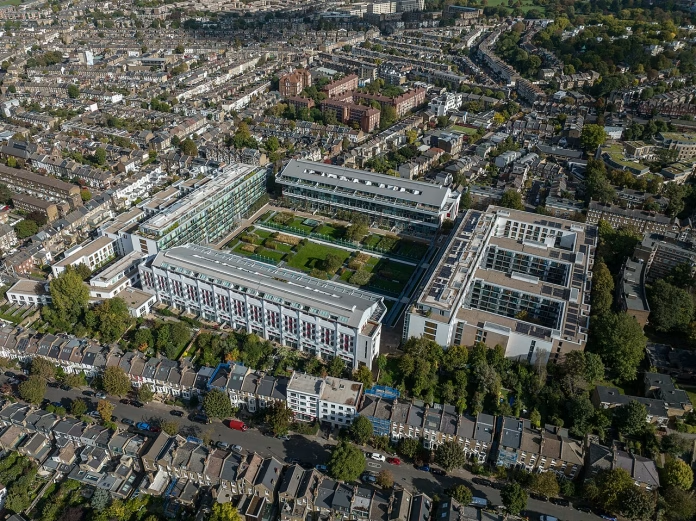
Highbury is no longer a stadium, but it refused to disappear. The old Arsenal house was converted into a housing complex that preserves part of its facades and a garden where the playing field used to be.. Between 1913 y 2006, that corner of north London was a football address that needed no introduction. Now called Highbury Square. They changed the keys to the doors, the neighbors and the noise on Sundays. The silhouette still allows us to recognize what was there.
There are fields that end up under a bulldozer and survive in photographs. Something stranger happened with Highbury: a part of its architecture remained standing while football left. Looking at his current images produces a sensation that is difficult to explain. Where the fan looks for a goal he finds a garden; where a stand awaits, windows. The place exists. What no longer exists is the possibility of returning to a game.
Cover image: Highbury Square en 2022. Photo: Arne Müseler / arne-mueseler.com / CC BY-SA 3.0 Germany. Fuente: Wikimedia Commons. Reduced version for web.
Arsenal weren't always at Highbury
The journey began on the other side of London. Arsenal played in Plumstead before Henry Norris encouraged their move north of the city. In 1913, the club changed its neighborhood and horizon: He left the Manor Ground and settled on land linked to St John's College of Divinity. It didn't come to a finished, shiny stage., but to a work that still had work ahead.
The sports inauguration arrived on 6 September 1913, with a 2-1 opposite Leicester Fosse. The original project was signed by Archibald Leitch, an inevitable name when talking about the architecture of British football. He Arsenal's historical account of the move remember to what extent that decision changed the course of the club. Before becoming a sentimental loss, Highbury had been a bet to grow.
A façade that looked too elegant for a football field
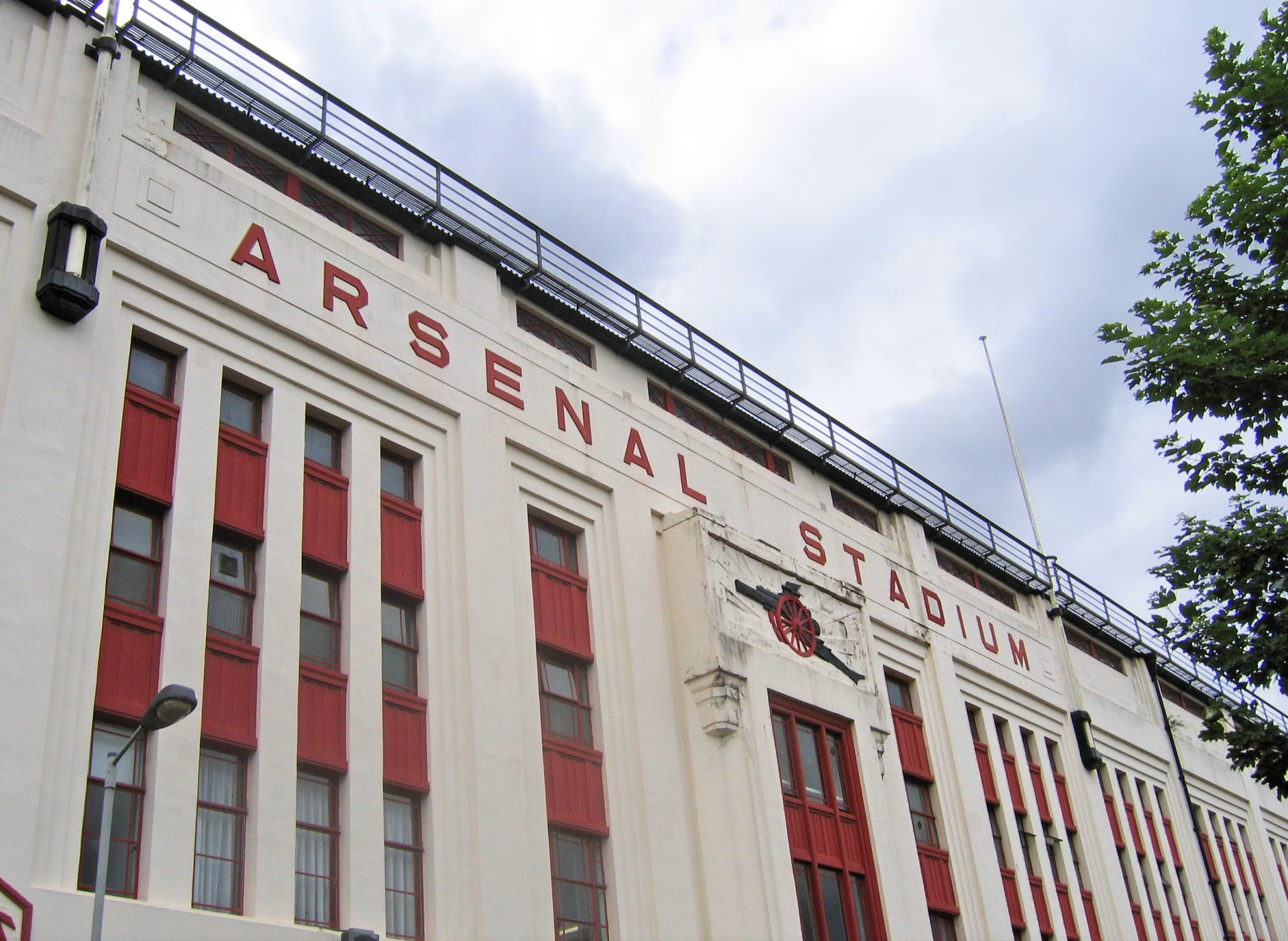
It is advisable not to put all periods in the same photograph. The stadium of 1913 and the Highbury that many fans remember were not exactly the same. He is in the stands, with its famous facade facing Avenell Road, was built in 1936 after the design of William Binnie. There appeared that art deco image that allowed you to recognize the field even without seeing a blade of grass.
The Historic England protection sheet It is classified as a Grade II building.. It wasn't just about saving a pretty wall: The set included administration spaces, reception and facilities for players. The entrance, the materials and the cannon emblem expressed a club idea. Football was also counted before going through the turnstile.
El Clock End: when a stand had its own surname
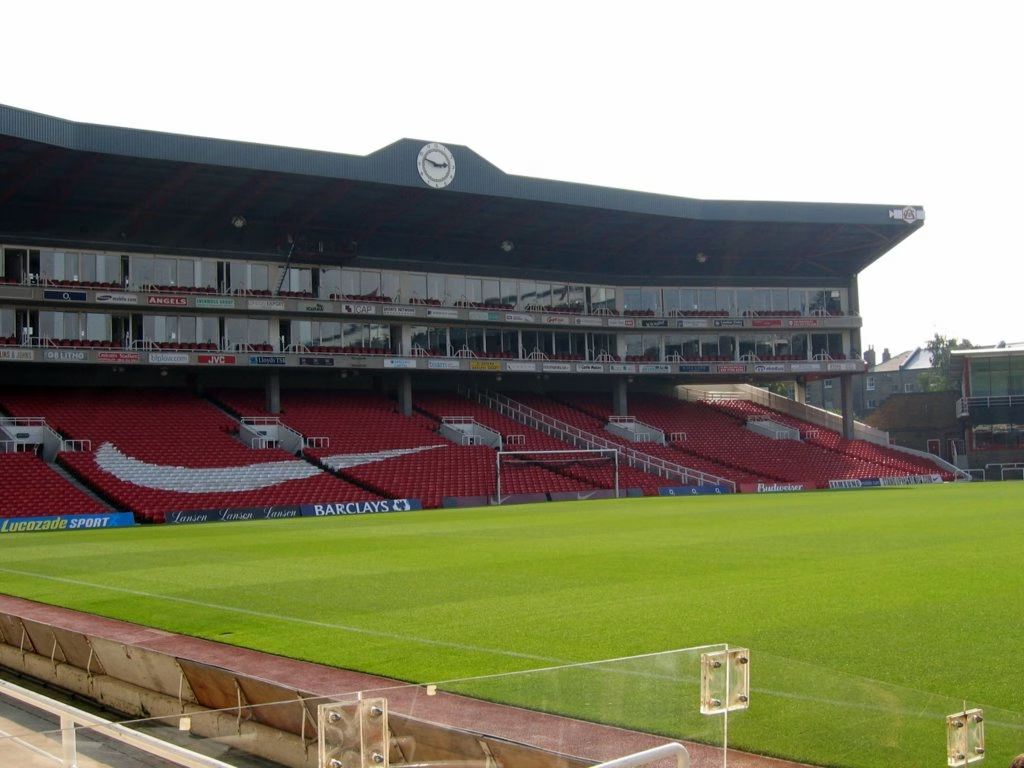
Highbury is not explained only by its façade. It is also explained by the names that remained in the fan's conversation.: North Bank, Clock End, the east and west stands. They are words that put everyone in their place.. A stadium ends up being that: a shared geography that is learned long before consulting a map.
The clock was one of its most recognizable symbols. When the move came, nor was it left abandoned like an old piece of junk: Arsenal documents their withdrawal from Highbury on 27 July 2006 and its transfer to the Emirates environment in its club clock history. The new field needed meters and seats, but he also needed to take something that his fans could recognize as his.
Henry took charge of turning off the lights
The last game was played on 7 May 2006. Arsenal and Wigan did not offer a quiet farewell: they offered a 4-2, a comeback and a hat-trick from Thierry Henry. Robert Pirès scored first, but Paul Scharner and David Thompson put the visitor ahead. The old field had to go through the shock again before saying goodbye.
Henry equalized before the break and then scored again 2 times. Highbury's final goal came from a penalty in the minute 76. The chronicle preserved by the Wigan historical archive allows you to follow that marker without turning the memory into a too comfortable postcard: the rival also played, It also hurt and was also part of the farewell.
Besides, Arsenal finished 4th and took the Champions League spot after Tottenham's defeat against West Ham. There was excitement for what ended, but also urgency for what was beginning. That mix explains the afternoon better than any solemn phrase.. While some looked at their seat for the last time, the team was still fighting for its future.
He Arsenal's official summary of the last game at Highbury brings movement back to images that many keep frozen. It is enough to see the pace of the comeback to remember that goodbyes do not always allow you to sit down and cry.
Highbury Square: what was preserved and what disappeared
The subsequent transformation did not consist of keeping the stadium intact and placing some furniture inside. According to the Allies and Morrison project, Highbury Square reúne 725 housing. The east and west stands were adapted to the new use, while the old funds gave way to new buildings. The intervention combined conservation and new construction.
The central void was the most expressive decision. Instead of also occupying it with buildings, The project left a garden in the space of the old field. A) Yes, the shape of the stadium remained legible. There is no need to imagine a stand that is no longer there: the layout of the buildings preserves the relationship between the sides, the funds and that center that previously claimed all eyes.
He Arsenal itself explains which parts of Highbury survived: the art deco east and west facades and the spatial memory of the playing field, converted into a private garden. That last word matters. We are not facing a public park where anyone can enter to recreate a goal, nor should we confuse the conservation of the dimensions of the field with the permanence of its original grass.
Can you visit the old Arsenal stadium?
You can go outside and see the Avenell Road façade from the public street.. It is a way to understand the neighborhood and the scale of the old stadium. The residential interior and its common areas, instead, should not be treated as a free-access attraction: people live there. A visit to the Emirates and a walk through old Highbury are different experiences, even if they share the same story.
The case fits between teams that changed stadiums in the 21st century, but it has a peculiarity. Here the move did not completely erase the previous address. There was enough building left for the visitor to understand the loss and enough transformation so that they are not fooled.: Arsenal no longer plays there.
That is why Highbury deserves to continue to be among those stadiums that are part of the memory of football. Not to compete in capacity with the current ones, but for something that an enlargement cannot make. During 93 years, Thousands of people learned to reach those doors to see their team. Today someone comes home from work, open one of them and enter the house. football is gone. The address remains the same.
Subscribe to get the latest posts sent to your email.


