
Last update 24 October, 2026 by Alberto Llopis
There are competitions that disappear and leave a gap. Others leave almost without making a sound., until a name on a record forces us to stop: what the hell was that? The Intercontinental Champions Super Cup belongs to that second group. It sounds like a tournament invented for a console game, but he brought together Pelé's Santos, Pedro Rocha's Peñarol and several of the clubs that had ruled football in the years 60.
The idea had a formidable condition: To enter it was not enough to be champion of your country, not even from your continent. We should have won the Intercontinental Cup. It was a short-lived competition., with editions in 1968 y 1969, a victory for Santos over Inter in Milan and a second installment that was left without a confrontation between Europe and South America. Precisely there begins the most interesting: behind the great name there are goals, resignations and a story that does not fit into a simple list of champions.
What was the Intercontinental Champions Super Cup?
Also known as Intercontinental Champions Cup Winners' Cup, intended to face the previous winners of the Intercontinental. The difference is important: the usual cup crossed the champions of Europe and South America of a season; This new competition recovered those who had already won that trophy. The club's past became its entry ticket.
In the first edition, the South American side was made up of Peñarol, Winner in 1961 y 1966; Santos, champion in 1962 y 1963; y Racing, winner in 1967. In Europe, Real Madrid from the first Intercontinental appeared, to from 1960, and Inter, who had repeated title in 1964 y 1965. There was no need to decorate the poster too much..
The historical documentation collected by RSSSF about the first edition allows you to follow its structure: a South American league, a European representation and a meeting between both sides. On paper, an extraordinary meeting. In practice, Getting everyone to show up was a lot more complicated than gathering their names..
1968: Santos won the trip to Milan
Santos did not receive a direct invitation to the final because they had Pelé. He had to beat Peñarol and Racing in a double-round league. He won his 2 matches against the Argentines and shared victories with the Uruguayans. With the system of 2 points for victory, ended with 6, ahead of 5 from Peñarol and the Racing point.
The classification had suspense until the last crossing of its rivals. Peñarol could catch up with the Brazilian team, but the draw against Racing left the way open for Santos. It is one of those details that rescues a tournament from statistics: Before the champion's photo there was another team doing calculations and an opportunity that slipped away.
He Santos Memory Center reconstructs that campaign and remember the contrast with Europe: Real Madrid withdrew and Inter moved on to the intercontinental event without contesting that tie.. There was no Madrid-Inter that we can add to the newspaper archive. There was an absence that already announced the fragility of the invention.
Toninho Guerreiro, the goal that decided an almost invisible cup
The edition was labeled 1968, but the Milan match was played on 24 June 1969. Another reason this story is confusing when consulted quickly. In San Siro, Santos beat Inter by 0-1 thanks to Toninho Guerreiro, who scored in the minute 57.
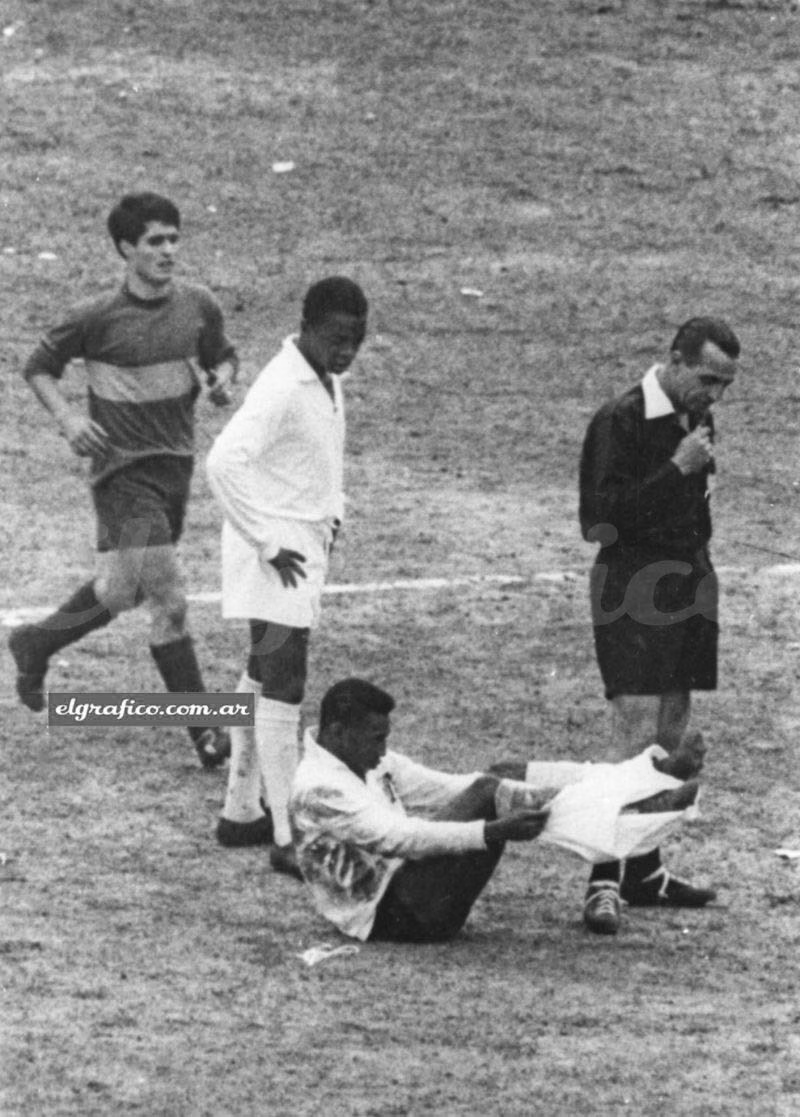
Pele was there, of course, but the name that was attached to the goal was that of his teammate. The story of Santos file on the conquest describes a shot taking advantage of a rejection by Bordon. a loose ball, an attentive striker and the difference between returning from Italy with a memorable victory or doing so with a draw.
Nor was he a Santos reduced to his star. Carlos Alberto was on that team., Clodoaldo, Edu and Ramos Delgado. In front were Mazzola, Burgnich, Corso y Jair. The names explain why the match is worth recovering: A competition can disappear from the calendar without the quality of those who played it disappearing..
The strange thing came later. A return match was planned, but it was never celebrated. Inter did not play in that second match and the Brazilian victory remained the only intercontinental duel of the competition. Santista memory preserves it as the World Cup Winners' Cup. To understand it, it is not necessary to invent a second final or retrospectively turn it into a FIFA Club World Cup..
1969: Pedro Rocha and Peñarol's response
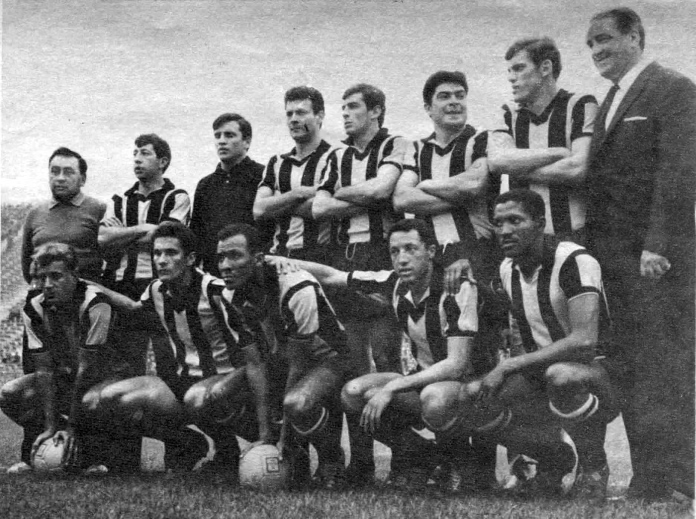
The next edition expanded the South American group with Estudiantes, who had already won the Intercontinental. Saints returned, Racing and Peñarol. And this time the protagonism changed shore: The Uruguayans finished first with 9 points, one more than Racing, after 4 victories, one draw and one defeat.
The decisive night came 30 from December to 1969 in La Plata. Estudiantes went ahead through Verde and Pedro Rocha responded with 2 goals. Peñarol won 1-2. This is how the historical chronicle of the club itself: a determined conquest away from home, coming back against another intercontinental champion.
That Peñarol had Mazurkiewicz, Elias Figueroa, Alberto Spencer and Juan Joya, among others, under the direction of Oswaldo Brandão. Names with which an entire era of South American football can be counted. Rocha, besides, He had signed other doubles during the tournament. His intervention in La Plata was not an isolated flash, but the culmination of a campaign of enormous weight.
However, there was no European final waiting for the champion. The European phase was not played. This detail must always accompany the record.: Peñarol won the South American competition 1969; did not defeat a European rival in a final of this Super Cup. Racing was second in the league, not the loser of a world final.
Winners of the Intercontinental Champions Super Cup
| Edition | South American winner | Intercontinental outcome |
|---|---|---|
| 1968 | Santos | Victory for 0-1 against Inter in Milan, he 24 June 1969. The return was not played. |
| 1969 | Penarol | There was no European phase or final between continents. |
This separation avoids mixing 2 different achievements. Santos claims its victory over Inter as a super world champion title; Peñarol retains the Super Cup 1969 among his conquests. Both memories have games behind them, but the routes were not the same. He record of results 1969 allows you to check the classification and the matches of that second edition.
Why did a tournament with such a poster disappear?
The answer is not in the lack of great footballers. It is in the difficulty of sustaining the competition. He Center for Football History Research states that a third edition was prepared, but it didn't materialize. The lack of European participation ended up leaving a project that depended on, precisely, to unite both continents.
Seen with perspective, the outcome was written in their own absences: a withdrawal before the first European crossing, a return that was never played and a second edition without an intercontinental final. It is not necessary to attribute cowardice to any team to explain what happened. The matches that were missed count as much as those that were played.
It is also advisable to separate the sporting relevance from its institutional recognition. The santista archive itself explains that CONMEBOL recognized the South American phase in 2005 and that UEFA recognition was missing for the European confrontation. That achievement should not be presented as an additional FIFA world title. As happens when reviewing the history and officialdom of the Fairs Cup, the nuances are part of the story, They are not a nuisance that we can erase.
A small cup in memory, huge in protagonists
It was not the South American Super Cup that began in 1988 nor the Cup Winners' Cup that pits the champions of the main CONMEBOL competitions against each other.. It was something else: a meeting of former Intercontinental winners who barely had time to build a tradition. Like the Latin Cup, remember that the map of international competitions was not born finished.
Maybe that's why his story is so engaging.. It does not need us to exaggerate its importance: has Toninho scoring in San Siro, Rocha lifting Peñarol in La Plata and Pelé playing a cup that many fans don't even know existed. Soccer preserves even the last result of some tournaments and leaves others in a corner. This one deserves to get out of there.
Subscribe to get the latest posts sent to your email.


