

Last update 31 October, 2026 by Alberto Llopis
Santiago Bernabéu did not start in an office. Before presiding over Real Madrid, he had put on his shirt, He had been captain and had known a football that was still far from the great European nights. That distance between the club he found and the one he left explains his figure better than any collection of adjectives.: presided over the entity between 1943 y 1978 y, during those years, Madrid won six European Cups and turned Chamartín into one of the continent's great stages.
Today his last name seems to belong to the stadium. But behind the stands there was a man who made decisions that could not fit into a single season.. Build a larger field, betting on Di Stéfano and supporting a European competition were pieces of the same ambition: that Madrid could compete with anyone and had the resources to continue doing so.
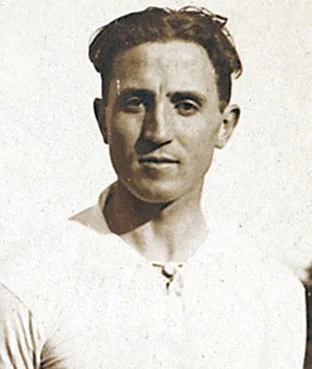
Santiago Bernabéu before the box: player and captain
He was born in Almansa, Albacete, he 8 June 1895. He joined the Madrid youth team at the age of fourteen and joined the first team in 1912. His time as a footballer lasted until 1927: fifteen years in the first team. He later joined the board of directors.. His relationship with the club, therefore, He was not born with the presidency; He had been there for decades when he took office.
The photograph of that Bernabéu with boots forces us to change the focus. We are not facing a president who discovered football from the box, but before someone who had occupied the other side. The player and the manager belong to different eras of the same club. Between the two you can read a good part of the transformation of Spanish football.
The New Chamartín: think beyond next sunday
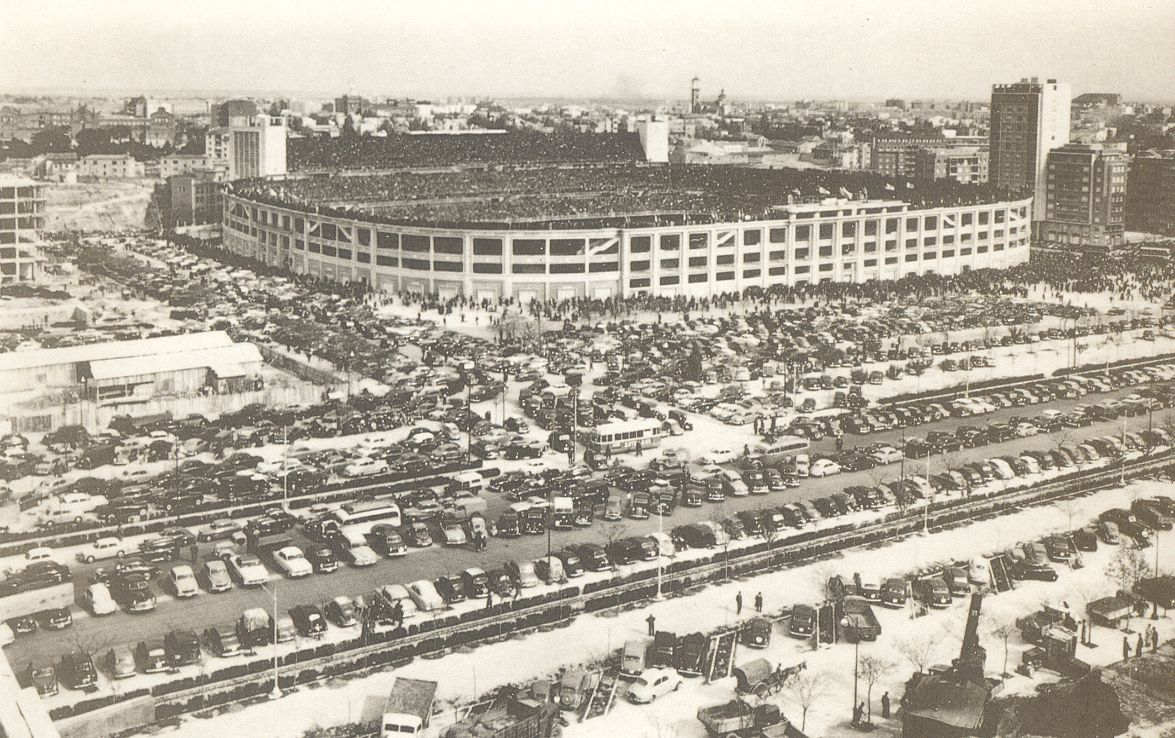
One of his most lasting decisions was to build a new stadium. The New Chamartín opened the 14 from December to 1947 with a match against Belenenses, whom Madrid beat 3-1. It was not a work after European rule: arrived earlier. First the stage was built; Then the team would appear that would fill it with historic nights.
That order matters. A stadium does not score goals, but it allows more fans to gather and support projects that need more than enthusiasm. Bernabéu's bet must be understood from there: expand the size of the club also off the pitch. The history of Santiago Bernabéu, The Temple of Madrid, is inseparable from that decision.
He 4 of January of 1955 it was approved that the field be named after him. As he remembers LaLiga in its review of the history of the stadium, The change was agreed upon at an assembly of committal partners. The first European Cup had not yet arrived. The recognition preceded the collection of trophies that would end up being associated with that surname..
Di Stéfano and the European dimension of Madrid
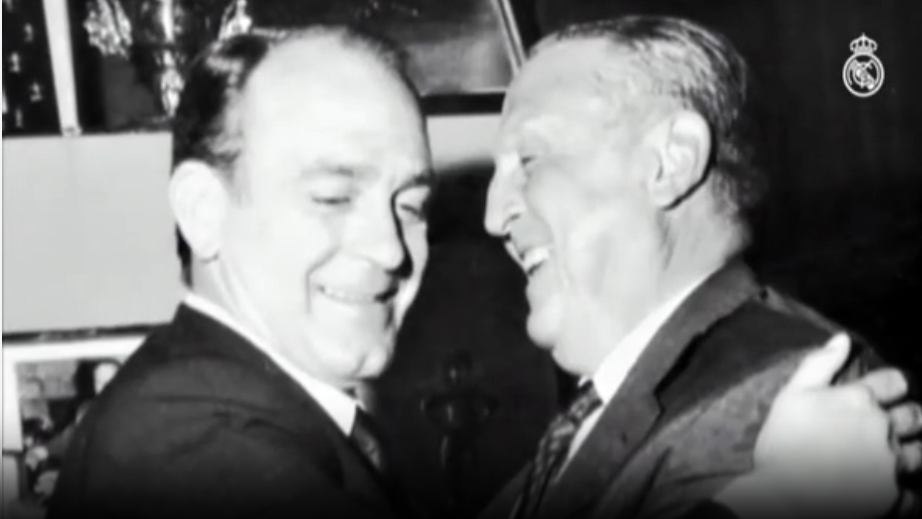
Among the sporting decisions of his presidency, the signing of Alfredo Di Stéfano takes center stage. Reducing the Argentine to a great scorer falls short of explaining why his name appears every time Madrid's change of scale is discussed.. The figure of di Stéfano, the great one who never played in a World Cup, ended up linked to a competition that was about to be born.
It is advisable to tell that birth well. Bernabéu was one of the promoters of the European Cup, but not its sole inventor. The initiative came from the French newspaper L'Équipe, with Gabriel Hanot and Jacques Ferran among its protagonists. The project brought together clubs interested in competing regularly and ended up under the organization of UEFA in June 1955, as explained history of the competition published by UEFA.
There was the success: understand what that idea could mean and support it. Madrid did not limit itself to participating. Won the first five editions, of 1956 a 1960. The Glasgow final, with the 7-3 al unity, left an image difficult to overcome: three goals from Di Stéfano and four from Puskás in the match that closed that streak.
The sixth European Cup and the relief of Madrid yeyé
The story did not end with that team. In 1966 the sixth European Cup arrived, against Partizan in Brussels. Goals from Amancio and Serena turned the score around to win by 2-1. It was Madrid yeye, another generation under the same presidency, with Miguel Muñoz on the bench and Gento as a link to the first conquests.
This relief gives perspective to his mandate. Winning with an extraordinary generation is one thing; continuing to compete when the protagonists change requires continuity. Doesn't mean it was all victories: Madrid also lost European finals, like those of 1962 y 1964. Remembering it does not diminish history. It makes it less solemn and much more real.
Real Madrid's record of achievements during his presidency
The Real Madrid historical record collects these football titles during the presidency of Santiago Bernabéu:
- 6 European Cups.
- 16 Suspenders.
- 6 Spain cups.
- 1 Intercontinental Cup.
- 2 Latin Cups.
- 2 Small World Cups.
They are competitions of different nature and era; It is not advisable to mix them as if they all had the same weight. The figure that best summarizes the international leap is the six European Cups, while the sixteen Leagues show domestic continuity. His presidency also covered other sections, especially basketball: The club's project was not exhausted in Sunday's eleven.
The Santiago Bernabéu Trophy: a tribute from the club, not from UEFA
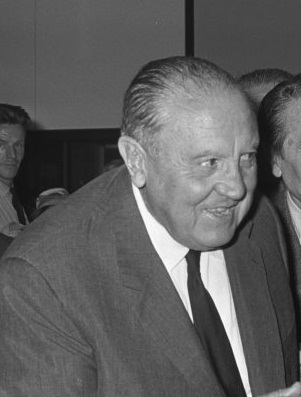
Bernabéu died on 2 June 1978. One year later, Real Madrid organized a friendly tournament in his memory. The first edition of the Santiago Bernabéu Trophy began on 31 of August of 1979 and brought together Madrid, Ajax, Bayern and Milan. It was a club initiative, how you document your historical archive of that decade, not a trophy created by UEFA.
There is something revealing in that tribute: invite big European teams to the field that bore his name. Estadio, international rivals and fans gathered in the same place. It is not necessary to turn Bernabéu into a character without nuances to understand his size in Madrid history. It is enough to follow the journey from that footballer of 1912 to the club he left in 1978.
Subscribe to get the latest posts sent to your email.

